
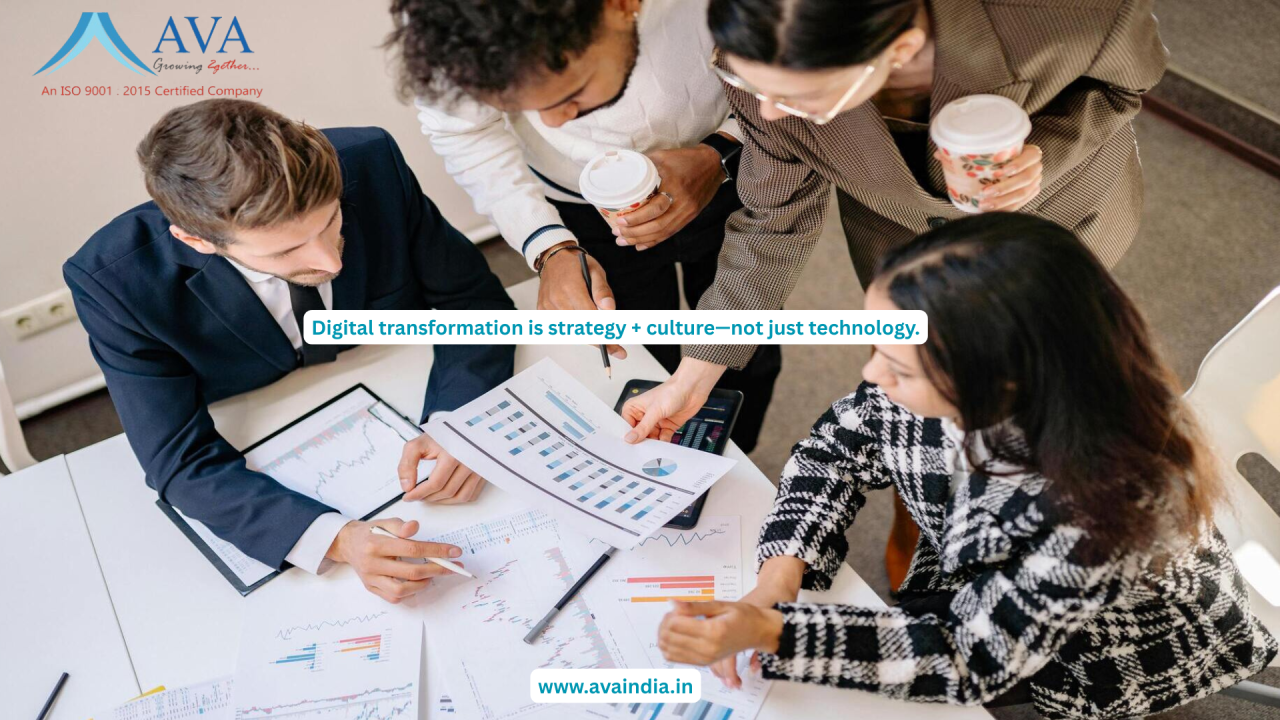
Digital Transformation and the Consultant's Evolving Role
AVA India Services (P) Limited • March 2, 2026
In today’s rapidly shifting business landscape, Digital Transformation has become more than a buzzword—it is a strategic necessity. Organizations across industries are reimagining their operations, customer experiences, and internal processes through technology. However, implementing transformation successfully requires more than adopting new tools. This is where Business Consulting plays a crucial and evolving role.
The New Era of Digital Transformation
Digital Transformation refers to integrating digital technologies into all areas of a business to fundamentally change how it operates and delivers value to customers. From cloud computing and data analytics to artificial intelligence and automation, businesses are embracing innovation to remain competitive.
Yet, transformation is not merely technological—it is cultural and operational. Many companies struggle because they underestimate the complexity of change. A lack of strategic clarity, employee resistance, and poor implementation frameworks often derail transformation initiatives.
The Evolving Role of Consultants
Traditionally, consultants focused on identifying problems and recommending solutions. Today, the scope has expanded significantly. Modern Digital Strategy Consultants are strategic partners who guide organizations through end-to-end transformation journeys.
Their evolving role includes:
- Conducting Digital Maturity Assessments to evaluate readiness
- Designing data-driven transformation roadmaps
- Supporting Change Management initiatives
- Aligning technology adoption with long-term business goals
- Ensuring measurable ROI from digital investments
Consultants now bridge the gap between IT teams and leadership, ensuring innovation aligns with overall business vision.
Strategy Before Technology
Successful transformation begins with clear objectives, not tools. Consultants help define goals such as improving customer experience, optimizing operations, and increasing revenue streams. Through structured analysis and benchmarking, they create actionable frameworks that reduce risk and enhance scalability.
Driving Sustainable Growth
Consultants leverage analytics, business intelligence, and automation to create sustainable growth models while maintaining operational efficiency. They also focus on resilience, including cybersecurity strategy, digital governance, and agile leadership development.
The Human Side of Transformation
Technology alone cannot drive success. Consultants emphasize employee training, leadership alignment, and cultural adaptation to ensure smooth adoption. By fostering collaboration and transparency, they enable higher adoption rates and better outcomes.
The consultant’s role has evolved into a transformation architect—helping businesses not just survive disruption, but thrive.
Are organizations truly prepared for Digital Transformation, or do they still underestimate its strategic depth?